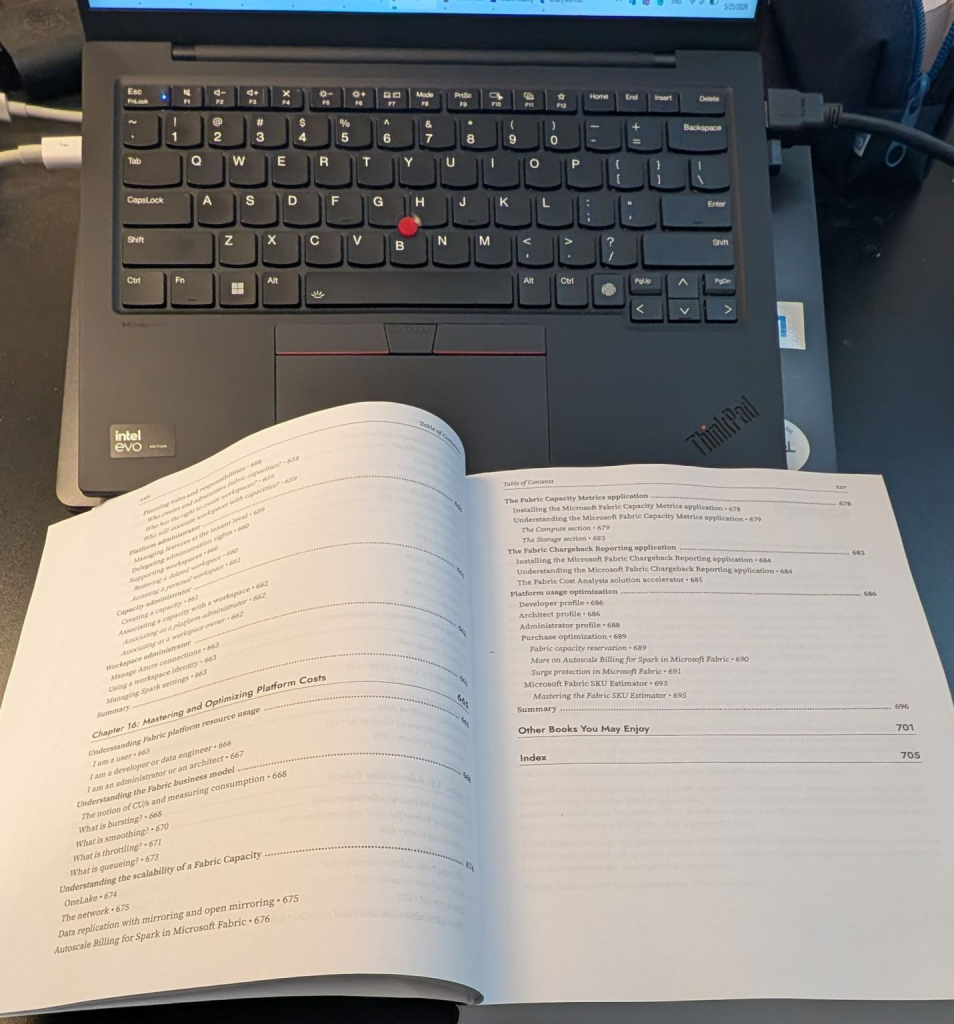
[Book Giveaway] ๐—ง๐—ต๐—ฒ ๐——๐—ฒ๐—ณ๐—ถ๐—ป๐—ถ๐˜๐—ถ๐˜ƒ๐—ฒ ๐—š๐˜‚๐—ถ๐—ฑ๐—ฒ ๐˜๐—ผ ๐— ๐—ถ๐—ฐ๐—ฟ๐—ผ๐˜€๐—ผ๐—ณ๐˜ ๐—™๐—ฎ๐—ฏ๐—ฟ๐—ถ๐—ฐ

Hello Cloud Marathoners!

I got an opportunity to work with Packt publishing to review a new book on Microsoft Fabric. I am excited to share my first impression and announce a giveaway for three lucky #CloudMarathoner community members who can get this book via raffle on June 5th.
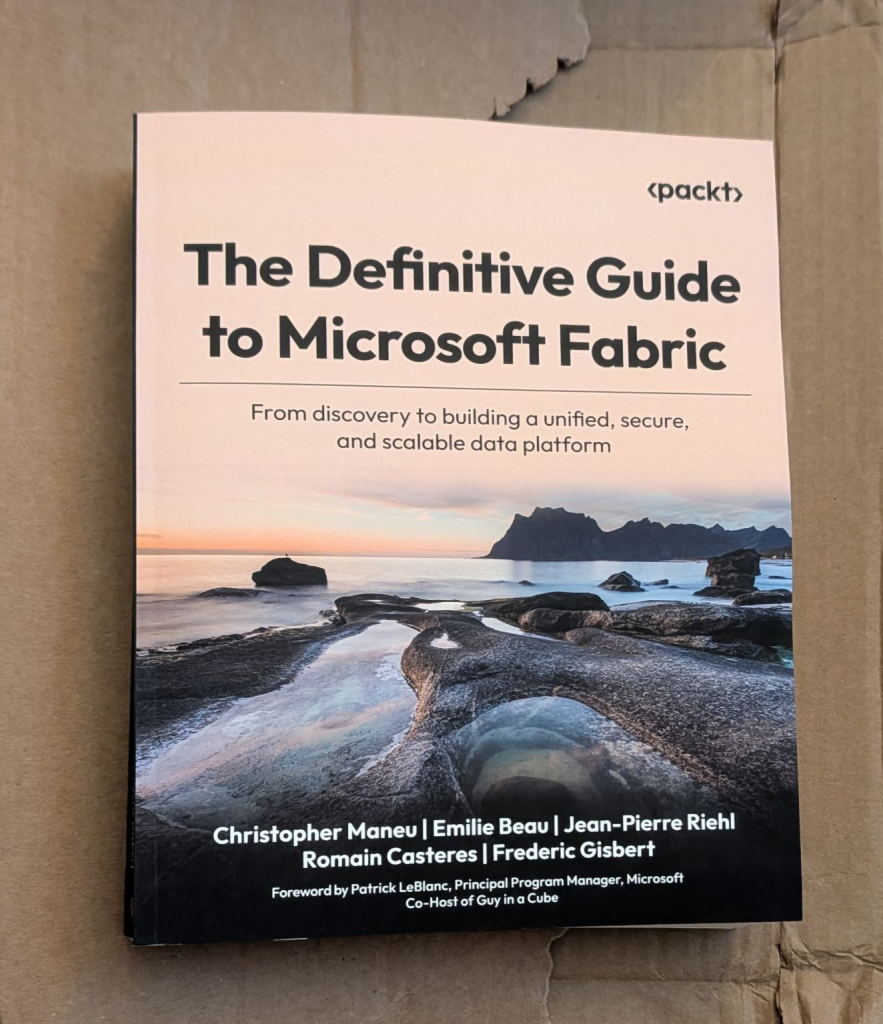
Brief A Cloud Marathoner Review

There is a moment many of us have experienced. You spend hours following a tutorial. Step by step. Everything works. You feel productive.
And thenโ€ฆ a few days later, you realize something is off.

You need to start over. Not because you did something wrongโ€”but because you didnโ€™t fully understand what you built.

If this sounds familiar, youโ€™re not alone. And honestly, this is one of the biggest silent lessons in tech: speed without understanding often leads to rework.

That is exactly why The Definitive Guide to Microsoft Fabric caught my attentionโ€”and why I wanted to share it with the Cloud Marathoner community.

What is Microsoft Fabric?

Letโ€™s simplify it: Microsoft Fabric is a unified data and analytics platform.

Instead of working with multiple disconnected services, Fabric brings everything together; data ingestion, storage, transformation, analytics, AI, and visualizationโ€”into a single integrated experience.

Think about it this way:

  • One place to store your data (OneLake)
  • One platform to process and transform it
  • One ecosystem to build insights, reports, and intelligent solutions

Microsoft Fabric includes capabilities like:

  • Data Factory (data integration)
  • Data Engineering & Data Science
  • Real-Time Analytics
  • Data Warehouse
  • Power BI for visualization

The biggest shift here is not just about toolsโ€”itโ€™s about mindset:

Moving from fragmented solutions to a unified, scalable, and governed data platform.

And that is where many people struggle with understanding how everything fits together in Microsoft Fabric.

How to WIN the book raffle

As part of the Cloud Marathoner journey, I always try to give back to the communityโ€”not just through content, but through opportunities. For this book, I organized a simple giveaway:

๐ŸŽฏ 3 lucky winners received a free copy

To participate, community members could:

  • Liked ๐Ÿ‘ the post
  • Commented ๐Ÿ’ฌ
  • Reposted โ™ป๏ธ

Why do I do this?

Well, because learning should be accessible. Sometimes, the difference between โ€œI want to learn thisโ€ and โ€œI actually startedโ€ is a single opportunityโ€”a book, a resource, a push, or a community moment.

As my dear friends, you know that Cloud Marathoner is not just about content. It is more about:

  • Encouraging continuous learning
  • Supporting each otherโ€™s journeys
  • Creating opportunities together

And as always, we grow faster when we grow together by helping each other to keep the momentum rolling.

What is covered in this book

What makes this book stand out is the depth and structure. It doesnโ€™t just teach how to use Microsoft Fabric, it goes well beyond by explains why things work the way they do. Basically, this book takes you on a full journey by beginning with:

๐Ÿ”น Foundations and Getting Started
  • It starts with What Microsoft Fabric is?
  • Core architecture concepts
  • Real-world use cases
  • Setting up your first environment

Next it continues with the most important sections of OneLake and UDD:

๐Ÿ”น OneLake and Unified Data Design
  • The lakehouse concept
  • Data organization strategies
  • OneLake as the unified data layer
  • Governance and security structures
  • Data mesh architecture approaches
๐Ÿ”น Data Ingestion & Transformation

This section explores multiple approaches to ingesting and shaping data where you learn practical and applicable scenarios in real-world:

  • Pipelines and orchestration
  • Notebooks (Spark-based engineering)
  • Real-time ingestion
  • Dataflows (low-code transformations)
  • SQL and Spark transformations
  • Even AI-assisted workflows with Copilot

Then it follows with a section that helps you stop guessing and start making informed decisions.

๐Ÿ”น Analytics, Real-Time Processing, and Architecture Decisions
  • Differences between data warehouse and lakehouse
  • Real-time analytics and event streaming
  • Time-series data and alerting patterns
  • When to use which architectural pattern
๐Ÿ”น Advanced Topics: AI, Governance, and Optimization

Finally, the book goes beyond building solutions by focusing on each aspect of your solution(s):

  • AI and machine learning integration
  • Semantic modeling and reporting
  • Governance and compliance
  • Security best practices
  • Cost optimization at scale
  • DevOps & DataOps principles

This is what transforms a solution into a production-ready platform.

Who will benefit from this book

This book is designed for a wide range of learners, including but not limited to:

  • Data engineers
  • Analytics engineers
  • Cloud and data architects
  • Analysts moving into design roles
  • Technical leaders working on modern data platforms

From a Cloud Marathoner perspective, I would break it down to simple three roles that you might associated with. Namely; Beginner. Practitioner and more advanced role such as Architect.
You will like this book as beginner, if youโ€™re overwhelmed by scattered tutorials, this book gives you structure and clarity.

You will like this book as practitioner, if you already work in Azure, Power BI, or data platforms, this helps you connect the dots across services.

You will like this book as architect, if you design systems, this book helps you think in terms of:

  • scalability
  • governance
  • platform design
  • long-term strategy

You donโ€™t need to know everything to start, just a basic understanding of databases, SQL, and Python would be enough to get started.

๐Ÿ ๐—–๐—น๐—ผ๐˜‚๐—ฑ ๐— ๐—ฎ๐—ฟ๐—ฎ๐˜๐—ต๐—ผ๐—ป๐—ฒ๐—ฟ ๐˜๐—ฎ๐—ธ๐—ฒ๐—ฎ๐˜„๐—ฎ๐˜†

Here is the biggest lesson I took from this book:

Donโ€™t just follow steps โ€” understand the system.

In my experience, the people who grow fastest in tech are not the ones who complete the most tutorials. They are the ones who take time to understand the โ€œwhyโ€ behind the โ€œhow.โ€

This book reinforces something I believe deeply:

  • Strong fundamentals = less rework
  • Better understanding = better decisions
  • Deep learning = long-term confidence

And that aligns perfectly with the Cloud Marathoner mindset:

๐Ÿƒ Learn deeply
๐Ÿ” Improve continuously
๐ŸŽฏ Build with confidence

Because in the end, this is not a sprint. Itโ€™s a marathon.

๐Ÿ’ฌ Keep me posted with your feedback

  • Are you currently learning Microsoft Fabric?
  • What challenges are you facing?
  • Have you ever had to redo work because of missing fundamentals?

Drop your thoughts, share your journey, and letโ€™s keep building together.

Because every step forward, no matter how small or tiny, is part of the progress in your brave marathon!

๐Ÿ“Œ Check out the book info ๐Ÿ‘‰ https://packt.link/TjLs6
#SharingIsCaring โค๏ธ

Reminder, the lucky ๐Ÿคž 3๏ธโƒฃ readers of this post who commented + re-posted will be notified via LinkedIn message.

Subscribe to the #CloudMarathoner LinkedIn #tag ๐Ÿ‘๐Ÿ‘€
Stay tuned for more Cloud, AI, Automation & Security-related posts.

๐™๐™ค๐™ก๐™ก๐™ค๐™ฌ ๐™ข๐™š ๐ŸŽฏ ๐™–๐™ฃ๐™™ ๐™—๐™š๐™˜๐™ค๐™ข๐™š ๐™– #๐˜พ๐™ก๐™ค๐™ช๐™™๐™ˆ๐™–๐™ง๐™–๐™ฉ๐™๐™ค๐™ฃ๐™š๐™ง โ›…๐Ÿƒโ€โ™‚๏ธ๐Ÿƒโ€โ™€๏ธ – ๐™‡๐™€๐™’๐™Ž ๐˜พ๐™Š๐™‰๐™‰๐™€๐˜พ๐™

Update:

๐Ÿ“Œ Check my LinkedIn post to learn about 3 lucky winners of the #book #giveaway. Thank you all for participating!!!
๐Ÿ… ๐—š๐—ฟ๐—ฎ๐˜๐—ฒ๐—ณ๐˜‚๐—น. ๐—˜๐—ป๐—ฒ๐—ฟ๐—ด๐—ถ๐˜‡๐—ฒ๐—ฑ. ๐—ฆ๐˜๐—ถ๐—น๐—น ๐—ฟ๐˜‚๐—ป๐—ป๐—ถ๐—ป๐—ด ๐š๐ฌ ๐Œ๐‚๐“ ๐‚๐จ๐ฆ๐ฆ๐ฎ๐ง๐ข๐ญ๐ฒ ๐‹๐ž๐š๐!

Greetings to all #CloudMarathoner friends!

Iโ€™m honored to be re-selected as ๐— ๐—–๐—ง ๐—–๐—ผ๐—บ๐—บ๐˜‚๐—ป๐—ถ๐˜๐˜† ๐—Ÿ๐—ฒ๐—ฎ๐—ฑ for the ๐˜๐—ต๐—ถ๐—ฟ๐—ฑ ๐˜†๐—ฒ๐—ฎ๐—ฟ ๐—ถ๐—ป ๐—ฎ ๐—ฟ๐—ผ๐˜„ โ€” and this one feels extra special: it marks my ๐Ÿญ๐Ÿต๐˜๐—ต ๐˜†๐—ฒ๐—ฎ๐—ฟ ๐—ฎ๐˜€ ๐—ฎ ๐— ๐—ถ๐—ฐ๐—ฟ๐—ผ๐˜€๐—ผ๐—ณ๐˜ ๐—–๐—ฒ๐—ฟ๐˜๐—ถ๐—ณ๐—ถ๐—ฒ๐—ฑ ๐—ง๐—ฟ๐—ฎ๐—ถ๐—ป๐—ฒ๐—ฟ.


What began as a small feather in my cap has grown into a cornerstone of my career. From Windows, .NET Developer to Microsoft Azure, the journey has been all about always learning, always teaching, and blending lessons from real customer projects into practical, hands-on guidance for the community.

To everyone whoโ€™s paced with meโ€”mentees, peers, customers, and fellow Cloud Marathoners โ€” ๐˜๐—ต๐—ฎ๐—ป๐—ธ ๐˜†๐—ผ๐˜‚ for the miles weโ€™ve logged together.

The next chapter is calling (I might have to ask my agent(!) which one it is ๐Ÿ˜‰), but the mission remains the same: ๐—ฒ๐—บ๐—ฝ๐—ผ๐˜„๐—ฒ๐—ฟ ๐˜๐—ต๐—ฒ ๐—ฐ๐—ผ๐—บ๐—บ๐˜‚๐—ป๐—ถ๐˜๐˜† ๐˜๐—ผ ๐—ด๐—ผ ๐˜๐—ต๐—ฒ ๐—ฑ๐—ถ๐˜€๐˜๐—ฎ๐—ป๐—ฐ๐—ฒ.

Letโ€™s keep training, sharing, and lifting each other โ€” ๐—ผ๐—ป๐—ฒ ๐—บ๐—ถ๐—น๐—ฒ, ๐—ผ๐—ป๐—ฒ ๐˜€๐—ธ๐—ถ๐—น๐—น, ๐—ผ๐—ป๐—ฒ ๐˜„๐—ถ๐—ป ๐—ฎ๐˜ ๐—ฎ ๐˜๐—ถ๐—บ๐—ฒ.

Onward to the next leg!
#CloudMarathoner #MVPBuzz #MCTBuzz

๐Ÿ“Œ Learn about ๐— ๐—–๐—ง (๐— ๐—ถ๐—ฐ๐—ฟ๐—ผ๐˜€๐—ผ๐—ณ๐˜ ๐—–๐—ฒ๐—ฟ๐˜๐—ถ๐—ณ๐—ถ๐—ฒ๐—ฑ ๐—ง๐—ฟ๐—ฎ๐—ถ๐—ป๐—ฒ๐—ฟ) program ๐Ÿ‘‰ https://lnkd.in/dmHBrBnj

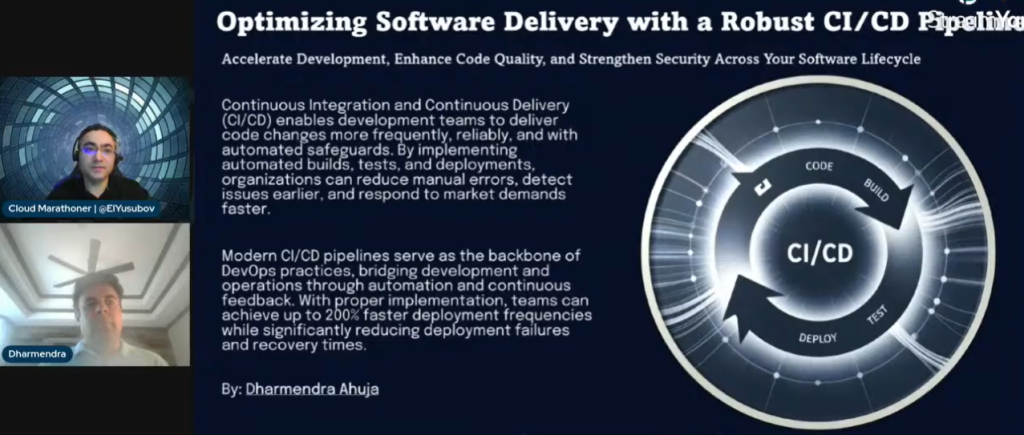
How to accelerate software delivery: Building a Scalable CI/CD Pipeline

Hello my dear Cloud Marathoners!

As the moderator, I had the pleasure of guiding an engaging conversation with our featured speaker, Dharmendra Ahujaโ€”a multi-cloud Certified Solution Architect, DevSecOps, and Data Engineer with 18+ years of experience.
Dharmendraโ€™s expertise spans cloud-native architectures, CI/CD, containerization, and Infrastructure-as-Code, making him the perfect guide for this journey.

Best Practices for Scalable CI/CD Pipelines

Dharmendra shared actionable insights on designing pipelines that scale with your team and application needs. From modular pipeline stages to leveraging cloud-native tools, the focus was on building resilient, maintainable workflows.

Automated Testing & Build Automation

We explored how Jenkins and CircleCI streamline automated testing and build processes. Dharmendra emphasized the importance of integrating tests early and often, ensuring every code change is validated before deployment.

Deployment Strategies: Blue/Green & Canary

The session highlighted advanced deployment strategies:

  • Blue/Green Deployments: Minimize downtime and risk by switching traffic between identical environments.
  • Canary Releases: Gradually roll out changes to a subset of users, enabling real-time feedback and rapid rollback if needed.

DevSecOps Integration

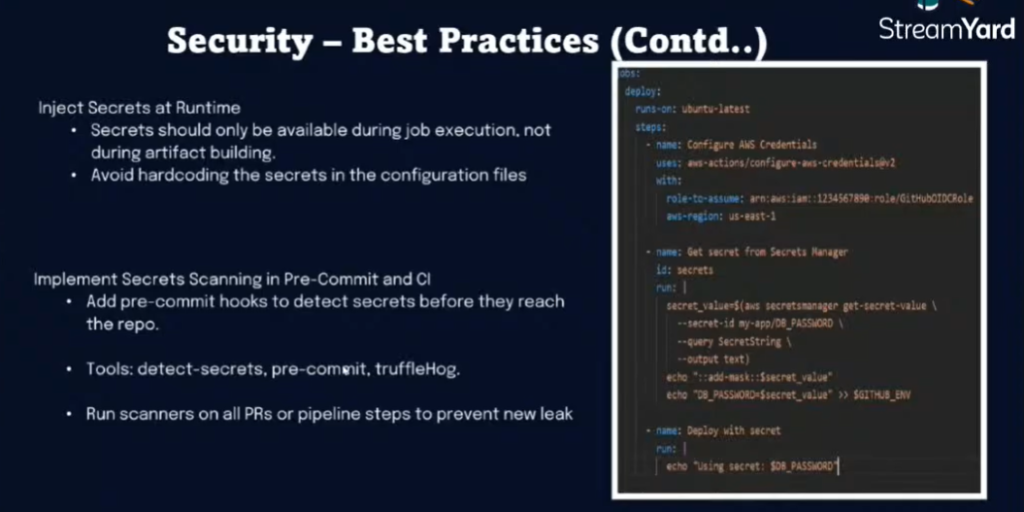
Security isnโ€™t an afterthoughtโ€”itโ€™s baked into the pipeline. Dharmendra discussed proactive DevSecOps practices, from automated vulnerability scanning to policy enforcement, ensuring every release is secure by design.

Real-Time Monitoring with Prometheus & Datadog

Visibility is key!
In this session, we learned how integrating Prometheus and Datadog provides real-time monitoring, alerting, and analyticsโ€”empowering teams to detect issues early and optimize performance.

Reducing Time-to-Market by Up to 40%

By adopting these best practices, organizations can dramatically reduce time-to-market, delivering value to customers faster without sacrificing quality or security.

Engaging Q&A

Throughout the session, I asked our presenter questions that sparked lively discussion:

  • How do you choose the right CI/CD tools for multi-cloud environments?
  • What are the biggest challenges in integrating security into pipelines?
  • Can you share a real-world example of a successful blue/green deployment?

Dharmendraโ€™s responses were packed with practical advice and real-world stories, making the session both informative and inspiring.

Ready to Elevate Your DevOps Game and watch the full episode?

๐Ÿ”— Session recording > https://www.youtube.com/live/hmlgsNV6mLo?si=2l-xoQ41V7UQEFQ-
๐Ÿ“Œ LinkedIn announcement > Accelerating Software Delivery: Building a Scalable CI/CD Pipeline

Whether youโ€™re just starting your DevOps journey or looking to optimize your existing pipelines, the Cloud Marathoner community is here to support you. Letโ€™s keep running toward cloud excellenceโ€”together!

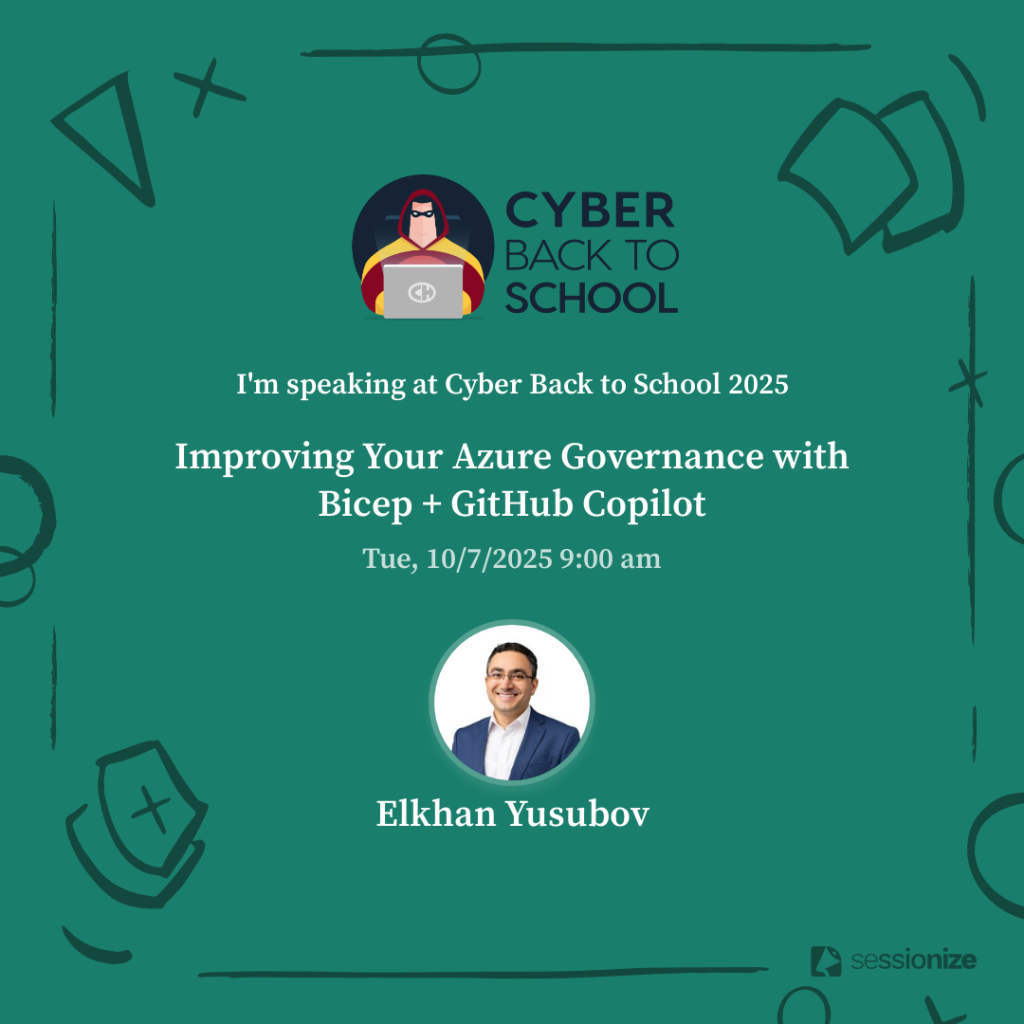
Cyber Back to School – Improving Your Azure Governance with Bicep + GitHub Copilot

Greetings to all Cloud community and Cloud Marathoner friends!

Did you know that the Cyber Back to School 2025 is started on October first?
It is community organized event that you don’t want to miss out.

Cyber Back to School event

Cyber Back to School is an annual community event featuring IT professionals from across the world. This event was started in 2024 by Microsoft MVP and MCT Community Lead, Dwayne Natwick. Microsoft community Leader, Microsoft MCT, blogger, and public speaker, Derek Smith, joined the team as co-organizer in 2025.
In 2025, Cloud Marathoner and Microsoft MVP and MCT, Elkhan Yusubov began assisting with social media and promotion of the event. Community members submit sessions, either videos or blog articles, to provide viewers with actionable knowledge. The event takes place every October, from 01 October to 31 October.

This year I submitted two sessions and look forward to sharing the first one on this blog below.

What is covered in my session?

Strong governance is the foundation of a secure, scalable, and cost-effective cloud environment. In this hands-on session, weโ€™ll explore together how to use Bicep โ€” Azureโ€™s new infrastructure as code language โ€”alongside GitHub Copilot to streamline and strengthen your Azure governance strategy.

You will learn the following in this session:

  • โœ… Azure Governance: policies, role-based access control (RBAC), resource locks, and naming conventions
  • โœ… Resource Governance rules with Bicep code
  • โœ… GitHub Copilot to the rescue of reduce errors and follow best practices in IaC
  • โœ… Real-world examples
  • โœ… Automating governance at scale
  • โœ… Tips for integrating governance into your CI/CD workflows

This session is designed for early-career cloud engineers and architects looking to build confidence in managing Azure environments with automation and AI-assisted development.

Azure Governance

As a cloud engineer or working professional stepping into the world of Microsoft Azure, one of the most important concepts to grasp early is Azure Governance. Think of it as the set of rules and practices that help organizations manage their cloud resources effectively, securely, and in a cost-efficient way. Letโ€™s break down some of the key components of Azure Governance:

๐Ÿ›ก๏ธAzure Policies โ€“ Enforcing Rules

Azure Policies are like the rulebook for your cloud environment. They help ensure that resources are created and managed in a way that aligns with your organizationโ€™s standards. For example: You can create a policy that only allows resources to be deployed in specific regions (e.g., only in West Europe or East US), or that requires all storage accounts to have encryption enabled.

Why it matters?
It helps prevent misconfigurations, ensures compliance, and keeps your environment secure and cost-effective.

๐Ÿ‘ฅ Role-Based Access Control (RBAC) โ€“ Managing Who Can Do What

RBAC is Azureโ€™s way of controlling who has access to what resources and what actions they can perform. For example: You can give a developer access to manage virtual machines in a resource group but not allow them to delete the resource group itself.

Why it matters?
It follows the principle of least privilege, ensuring users only have the permissions they needโ€”nothing more, nothing less.

๐Ÿ”’ Resource Locks โ€“ Preventing Accidental Deletion or Changes

Resource Locks are like putting a โ€œDo Not Touchโ€ sign on critical resources. We have following types of locks:

  • ReadOnly โ€“ Users can read the resource but canโ€™t make changes.
  • CanNotDelete โ€“ Users can modify the resource but canโ€™t delete it.

As a use case example: You can lock a production database to prevent accidental deletion during maintenance.

Why it matters?
It adds an extra layer of protection for important resources and prevents accidental changes in your important resources.

๐Ÿท๏ธ Naming Conventions โ€“ Keeping Things Organized

Naming conventions are standardized ways of naming your resources so theyโ€™re easy to identify and manage. For example: A virtual machine name like vm-prod-weu-app01 could tell you the following additional information:

  • Itโ€™s a VM
  • Used in production
  • Located in West Europe
  • Itโ€™s an app server

Why it matters?
It improves clarity, helps with automation, and makes managing large environments much easier.

๐Ÿงฉ Bringing It All Together

Imagine youโ€™re building a cloud environment for a company. With Azure Governance you can achieve the following mission:

  • Define rules (Policies)
  • Control access (RBAC)
  • Protect critical resources (Locks)
  • Stay organized (Naming Conventions)

Together, these tools ensure your cloud environment is secure, compliant, and manageableโ€”even as it grows. Mastering Azure Governance early will set you up for success as you build scalable, secure, and well-managed cloud solutions.

Resource governance with Bicep Code

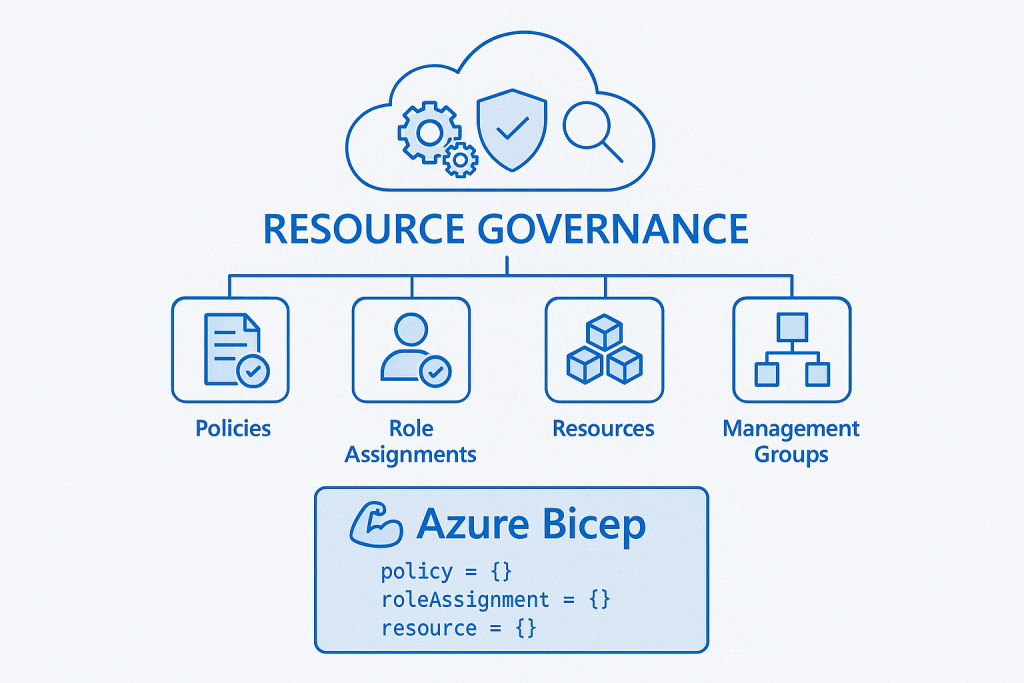
Resource governance with Azure Bicep empowers organizations to manage cloud resources consistently and securely through declarative infrastructure-as-code. By defining policies, role assignments, and resource configurations in Bicep templates, teams can enforce compliance, reduce configuration drift, and automate deployments across environments. This approach enhances visibility and control, ensuring that resources adhere to organizational standards from the moment they’re provisioned.

Additionally, Bicep simplifies governance by integrating seamlessly with Azure Policy and management groups, enabling scalable enforcement of rules across subscriptions. Its modular structure promotes reuse and collaboration, allowing teams to build standardized templates for tagging, cost management, and security controls. Ultimately, Bicep streamlines governance workflows, reduces manual overhead, and fosters a culture of accountability and best practices in cloud operations.

GitHub Copilot to the rescue

When working with Azure governance at scale, writing Bicep templates for policies, RBAC assignments, and resource locks can quickly become repetitive and time-consuming. This is where GitHub Copilot shines. By leveraging AI-powered code suggestions, Copilot can help you generate Bicep snippets for common governance tasks, such as defining policy assignments or creating role definitions, with minimal effort. Instead of starting from scratch, you can use Copilot to accelerate development and reduce human error.

Copilot doesnโ€™t just autocomplete codeโ€”it understands context. For example, if youโ€™re writing a Bicep module for resource naming conventions or enforcing tags, Copilot can infer patterns from your existing code and suggest consistent, reusable structures. This capability is especially useful when implementing governance across multiple environments, where consistency is critical. By integrating Copilot into your workflow, you can focus on higher-level governance strategy while letting AI handle the boilerplate.

For example, start a new governance.bicep file and type a guiding comment (e.g., // Enforce required tag 'costCenter' with a fixed value at the RG scope). Copilot will suggest a snippet similar to the one below; accept with Tab and adjust as needed (swap scopes, parameterize values, or plug in your builtโ€‘in/custom policy definition ID). This is usually faster and less error-prone than writing from scratchโ€”and easy to refactor into a reusable module later.


@description('Assign a policy to require a costCenter tag at the resource group scope')
param tagName string = 'costCenter'
param tagValue string = 'FIN-001'

// Replace with the built-in or custom policy definition ID that requires a tag and its value.
@description('Policy definition ID for "Require a tag and its value"')
param policyDefinitionId string = '/providers/Microsoft.Authorization/policyDefinitions/<RequireTagAndItsValue_ID>'

resource tagPolicyAssignment 'Microsoft.Authorization/policyAssignments@2021-06-01' = {
  name: 'enforce-costcenter-tag'
  scope: resourceGroup()
  properties: {
    displayName: 'Enforce cost center tag'
    policyDefinitionId: policyDefinitionId
    enforcementMode: 'Default'
    parameters: {
      tagName:  { value: tagName }
      tagValue: { value: tagValue }
    }
  }
}


Why It Matters?
Governance is not optionalโ€”itโ€™s the backbone of a secure and compliant cloud environment. Poorly implemented governance can lead to security gaps, compliance violations, and operational inefficiencies. GitHub Copilot helps bridge the gap between governance intent and execution by reducing complexity and speeding up template development. In short, it empowers teams to implement governance as code effectively, ensuring that policies, RBAC, and resource controls are applied consistently across your Azure estate.

Automating governance

Manual governance processes often lead to inconsistencies, delays, and human errorโ€”especially in large-scale Azure environments. Automating governance ensures that policies, RBAC assignments, resource locks, and naming conventions are applied uniformly across all subscriptions and resource groups. By leveraging Infrastructure as Code (IaC) with Bicep, you can codify governance rules and deploy them through automated pipelines, eliminating the need for repetitive manual configurations.

Automation also enables continuous compliance. Instead of relying on periodic audits or manual checks, you can integrate governance enforcement into your CI/CD workflows. For example, every time a new resource group or workload is deployed, your pipeline can validate naming conventions, apply required tags, and assign policies automatically. This proactive approach reduces risk and ensures that governance is not an afterthought but an integral part of your deployment lifecycle.

Why It Matters?
In todayโ€™s cloud-first world, speed and compliance must coexist. Without automation, governance becomes a bottleneck, slowing down innovation and increasing the likelihood of misconfigurations. Automating governance ensures that security, compliance, and operational standards are consistently enforced at scaleโ€”without sacrificing agility. It transforms governance from a reactive process into a proactive, embedded practice, giving organizations confidence that every deployment aligns with their standards from day one.

integrating governance into your CI/CD

Embedding governance into your CI/CD pipelines ensures that compliance and security are not left to chance. Instead of applying policies and RBAC assignments after deployment, you can make them part of the deployment process itself. By integrating Bicep templates into your pipeline, every resource provisioned through CI/CD automatically adheres to your governance standardsโ€”whether itโ€™s naming conventions, resource locks, or mandatory tags.

This integration typically involves adding governance steps to your pipeline stages. For example, in GitHub Actions or Azure DevOps, you can include tasks that deploy governance templates before or alongside application resources. You can also implement validation checks using tools like az bicep build or arm-ttk to ensure templates meet compliance requirements before they are merged. This approach creates a โ€œshift-leftโ€ model for governance, catching issues early and reducing costly remediation later.

Why It Matters?
Governance embedded in CI/CD transforms compliance from a manual, reactive process into an automated, proactive safeguard. It ensures that every deployment aligns with organizational standards without slowing down delivery. By integrating governance into pipelines, you reduce risk, improve consistency, and enable teams to innovate confidently, knowing that security and compliance are enforced by design, not by afterthought.

Demo and references

To help you get hands-on with governance-as-code, here’s a curated set of Microsoft Learn references covering key areas:

Policy Assignments via Bicep
Microsoftโ€™s QuickStart demonstrates how to assign a builtโ€‘in policy (e.g., audit unmanaged disks) using a Bicep file. It includes a complete example policy-assignment.bicep to deploy against a resource group.

Role Assignments via Bicep
This guide shows how to create an RBAC role assignment (e.g., Virtual Machine Contributor) by defining the necessary principal and scope in Bicep.

Resource Locks with Bicep
The Microsoft Learn page documents how to apply locks such as CanNotDelete or ReadOnly using the Bicep type Microsoft.Authorization/locks@2020โ€‘05โ€‘01.

Naming Conventions and Patterns
Microsoft advises using Bicep functions like uniqueString() and guid() under the “Name generation pattern” to ensure consistent, deterministic naming.

CI/CD Integration with Azure Pipelines
A QuickStart showcases how to integrate Bicep deployments into Azure Pipelines using tasks and .bicepparam files.

In Summary

Azure governance is the foundation for building secure, compliant, and well-managed cloud environments. By leveraging Bicep for Infrastructure as Code and integrating GitHub Copilot into your workflow, you can simplify governance implementation, reduce manual effort, and ensure consistency across deployments. When combined with automation and CI/CD integration, governance becomes proactive rather than reactiveโ€”enabling organizations to innovate confidently while maintaining control and compliance at scale.

Ready to Take Action?
Start implementing governance as code today! Explore Bicep to codify your Azure policies, RBAC, and resource controls, and let GitHub Copilot accelerate your development with intelligent code suggestions. Integrate these practices into your CI/CD pipelines to make governance seamless and automated.

The sooner you embed governance into your workflows, the faster youโ€™ll achieve secure, compliant, and scalable cloud environments. Try it now and transform governance from a challenge into a competitive advantage!

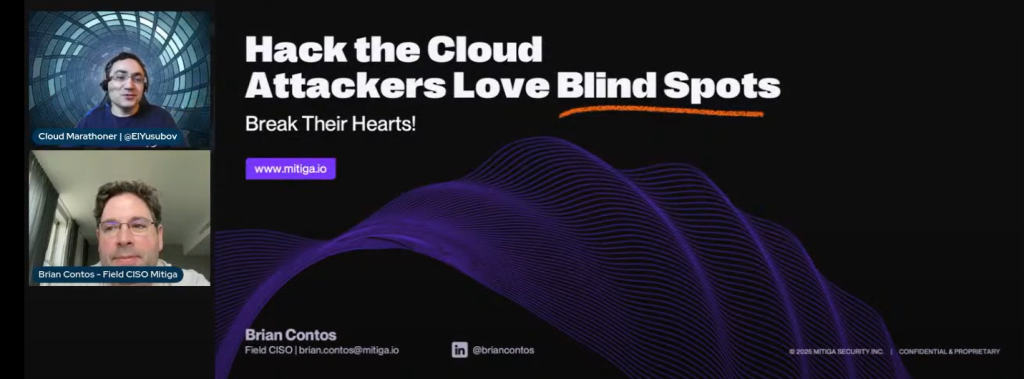
Hack the Cloud: Attackers Love Blind Spots, Break Their Hearts!

Hello Cloud Marathoner friends,

Last week, we had a very interesting session focused on cybersecurity.

Our guest speaker Brian Contos, shared his expertise on the following critical cybersecurity topics:

โœ… Real-life stories from the trenches, drawn from years of cloud-based incident response.
โœ… Exploration of various hacks to illustrate how breaches occur, what happens following a breach, and why organizations struggle to detect and respond.
โœ… Mitigation strategies to proactively prepare for a breach, discover malicious activity, and respond effectively.

Malicious actors are counting on your passivity, your blind spots, and your inability to detect and respond to attacks in the cloud. Break their hearts!

Are you ready to learn more about hacking ๐Ÿ” โ›” the cloud and how to prevent it โ‰๏ธ ๐Ÿค”
Tune in to hear and learn from real-world stories.

Real-World Examples

  • Crypto mining on hacked security cameras in a casino.
  • $15 million wire fraud via compromised Office 365 and fake domains.
  • MongoDB ransomware where attackers lied about stealing data.
  • Robot hack demo showing how easy it is to control industrial devices with no authentication.

When and Where

๐Ÿ“… Date: May 7th, 2025
๐Ÿ•’ Time: 5 PM UTC
๐Ÿ“ Recorded session URL

Don’t miss out on this amazing hacking session.
Let’s make the cloud a safer place together!

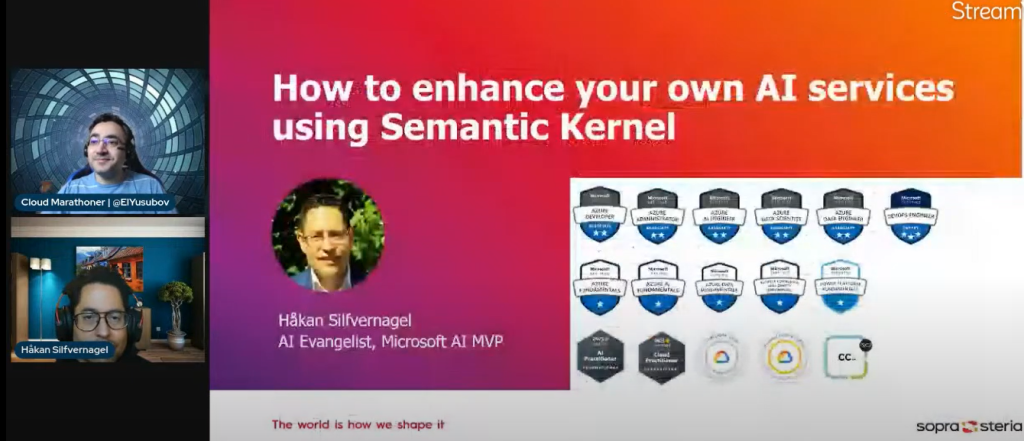
How to enhance your own AI services using Semantic Kernel

Greeting my dear #CloudMarathoner friends!!!

Last week, we had a great discussion with our guest speaker – Microsoft MVP, Hรฅkan Silfvernagel. Our topic was Azure Ai services using the Semantic Kernel with simple, yet insightful demos.


Don’t miss an opportunity to learn about ๐Ÿš€ #AzureAI services using Semantic Kernel today at the Cloud Lunch and Learn session ๐Ÿคฉ


What WILL YOU learn?

By checking this session, you will learn how to build your own CoPilot experience using the Semantic Kernel released as an open-source project. Our speaker has demonstrated how you can use skills, memories, connectors, and plugins in order to enhance the experience for your users.

WHEN and WHERE?

๐Ÿ—“๏ธ Wed, April 24 2025 @ 18:00 UTC
๐Ÿ“ย Recordedย session URL
๐Ÿ”— Registration URL ๐Ÿ‘‰ https://lnkd.in/eSNFkPGx

Check out the following session and let us know your feedback

Azure Spring Clean 2025 – sessions are accepted to present on Governance with Azure Bicep and AKS monitoring trends

Hello, hello my dear friends and community members!

This March month is going to be very busy, as I got notified that one of my solo sessions, and one joint session with Kasun – a Microsoft MVP and Docker captain – has been accepted, two weeks ago. And most importantly, I will be folding my sleeves to start preparations for the following sessions:

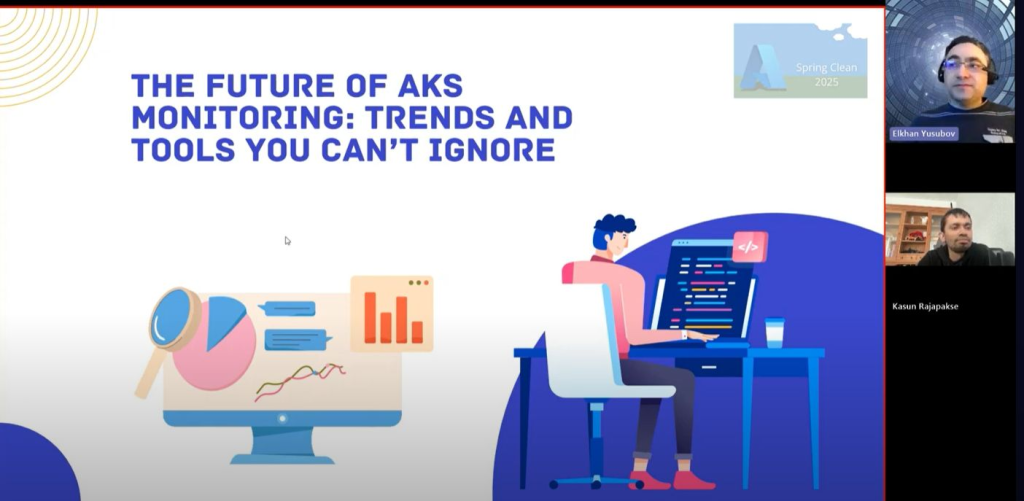
  • The Future of AKS Monitoring: Trends and tools you can’t ignore
  • Tips and tricks to automate resource governance with Azure Bicep

What to expect from a session – Future of AKS Monitoring?

In this session, we dive deep into the evolving landscape of Azure Kubernetes Service (AKS) monitoring โ€” exploring the latest trends, essential tools, and best practices to future-proof your observability strategy.

What you’ll learn in this session:

โœ… Current state of AKS monitoring: Azure Monitor, Log Analytics, Prometheus, and more.
โœ… Must-have tools: Grafana, Azure Managed Prometheus,
โœ… Best practices for designing scalable, high-availability monitoring solutions
โœ… Live demo: Setting up Prometheus + Grafana on AKS and integration

What to expect from a Governance with Bicep session?

In this new session, you will learn how to simplify resource governance, ensure compliance, and easily maintain control over your Azure environment.

I have following key topics included in the session:
โœ… Basics of Azure Policy and its core components
โœ… Creating and managing policy definitions and assignments
โœ… Leveraging built-in policies and custom policy creation
โœ… Integrating Azure Bicep for efficient resource deployment and governance
โœ… Real-world examples and use cases

Call to Action

Don’t miss these sessions during the March month, and as always, you are welcome to provide feedback or ask questions.

Reference post with links to the recorded session – The Future of AKS Monitoring: Trends and tools you can’t ignore.

Another reference post to a recorded session – Tips and tricks to automate resource governance with Azure Bicep.

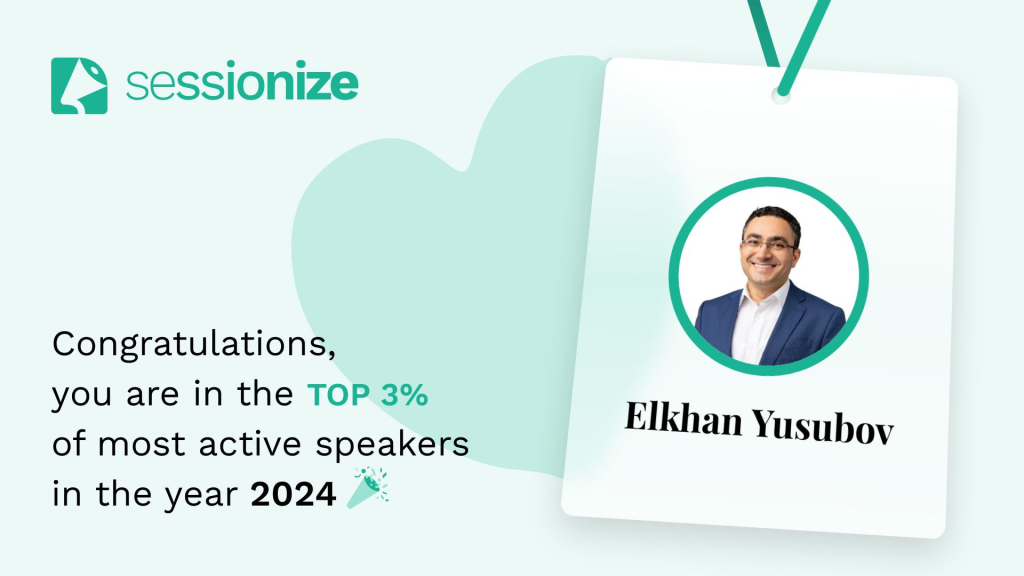
Recognized by Sessionize.com as a top 3% active speaker for 2024 ๐ŸŽ‰

Hello dear #CloudMarathoner family and community members!

I’m thrilled to share that Sessionize.com has recognized me as one of the top 3% most active speakers for 2024 ๐ŸŽ‰

This is my second time receiving this honor in the past few years, thanks to 42 international speaking events over the years.

Thank you for support

Huge Thank You to everyone for your incredible support, including our awesome #CloudMarathoner community and Sessionize.com for this recognition๐Ÿ™

I also want to extend my gratitude to T-Rex Solutions, LLC for their unwavering support in my Microsoft MVP and speaker journey. Your encouragement has been invaluable!

My Sessionize.com presentations

If you never checked it before, then please feel free to check my speaker profile ๐Ÿ‘‰ https://lnkd.in/eUcQ2tWS

You should be able to see my bio, past and upcoming events, and the topics I love discussing in my online and in-person sessions.

Let’s keep pushing the boundaries of cloud engineering and learning together ๐Ÿš€

Starting 2025 with an exciting renewal announcement ๐ŸŒŸ ๐ŸŽ‰

Greetings to all #CloudMarathoner friends!

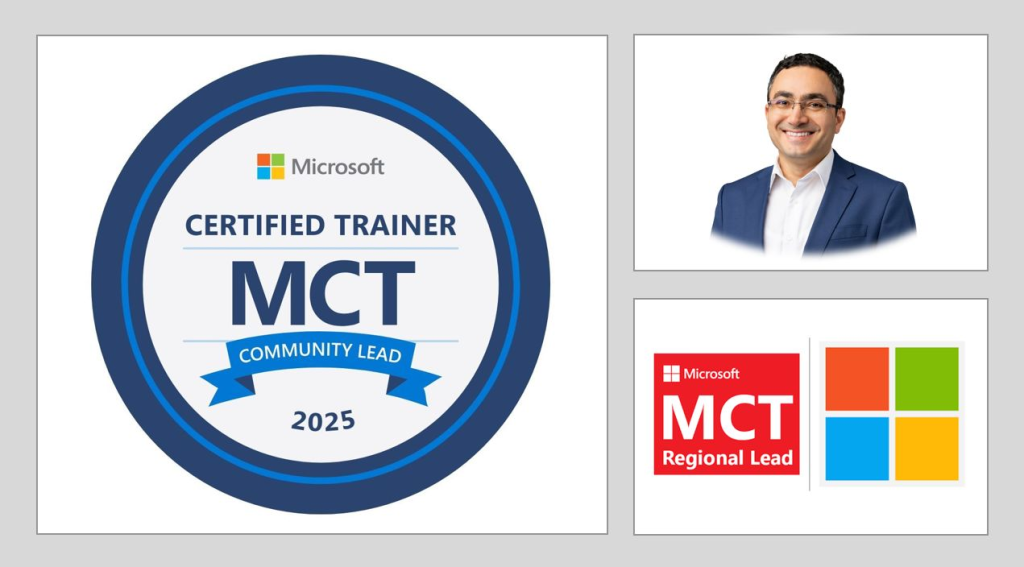
I am trilled and honored to share this great news with all of you. As of the beginning of January, I have been notified and recognized as Microsoft Certified Trainer (#MCT) Community Lead for the #USA region for 2025!

What is MCT Community Lead?

This role represents an incredible opportunity to continue empowering our vibrant training and learning community, fostering collaboration, and supporting MCTs in their mission to deliver impactful training experiences.

As your MCT Community Lead (previously known as, MCT Regional Lead), my focus will remain on sharing knowledge, nurturing connections, and elevating the presence of #Microsoft technologies across regions while helping new #MCT colleagues to excel!

Honored to serve you as MCT Community Lead in 2025

I am excited to continue working alongside my high-caliber trainer friends, driving meaningful initiatives, and building on the strong foundation of innovation and mentorship that makes our #community thrive in helping customers with #Microsoft technologies.

Thanks to the Microsoft team members, which includes Sarah Kong, Linda Larkan, MS, MEd, MCT, and previously Tracey Carisch have done an amazing job in reinvigorating this program ๐Ÿ™๐Ÿ™๐Ÿ™

Do you have questions about MCT program?

Please, check my following post on LinkedIn platform and let me know if you need any help with MCT program.

Again, and again – please let me know if you have any questions or suggestions to the MCT program and I will bring your voice and concern to MCT leadership and try to address it asap. Here is the URL for the post ๐Ÿ‘‰ https://www.linkedin.com/posts/elkhanyusubov_mct-usa-microsoft-activity-7280810348616531968-ia1t/

New session announcement – Are you interested to unlock your AKS skills with Azure bicep language?

Hello Cloud Marathoner friends!

If you are into managed Kubernetes services and Infrastructure as a Code implementation on Microsoft Azure, then keep reading.

Session Announcement

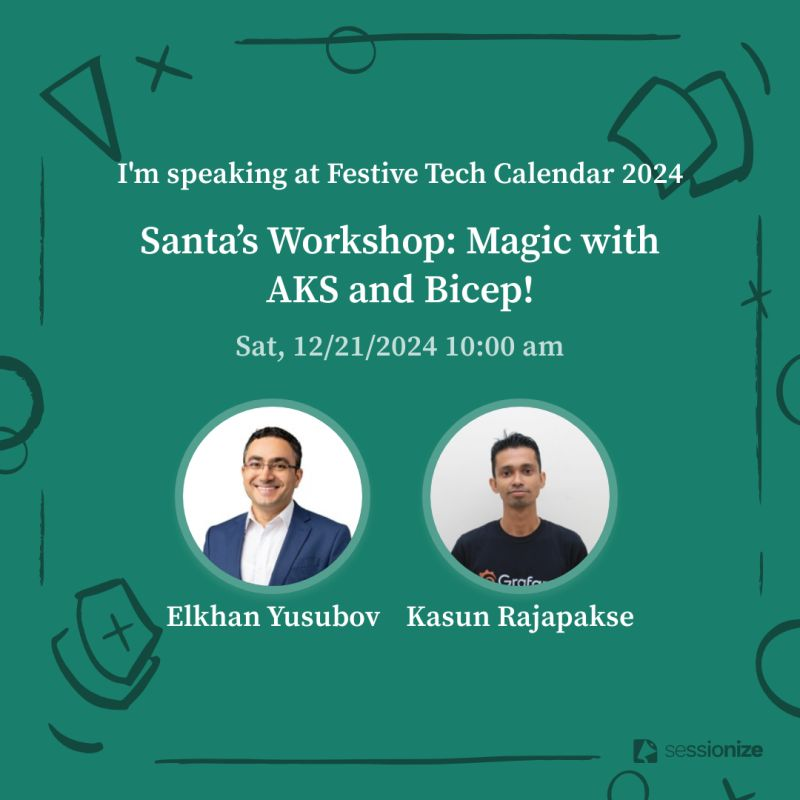
Next week. join our tech-savvy workshop with Kasun Rajapakse, an Azure MVP and Docker Captain. In this festive session for the Festive Tech Calendar event, we will unwrap the wonders of Azure Kubernetes Service (also known as AKS) provisioning using the Bicep language and showcase the latest AKS features.

What will be covered?

In this jolly session, we’ll delve into the secrets of deploying AKS clusters with Bicep, turning your cloud infrastructure into a winter wonderland of efficiency and scalability. Whether you’re an experienced elf or a newbie on Santa’s list, this session is perfect for everyone eager to harness the power of Azure Kubernetes Service.

What you need to do before session?

Get ready to sleigh your cloud game with our festive demonstrations of AKS features. Deck the halls with knowledge and cheer as we bring the magic of AKS and Bicep to life!

Call to Action

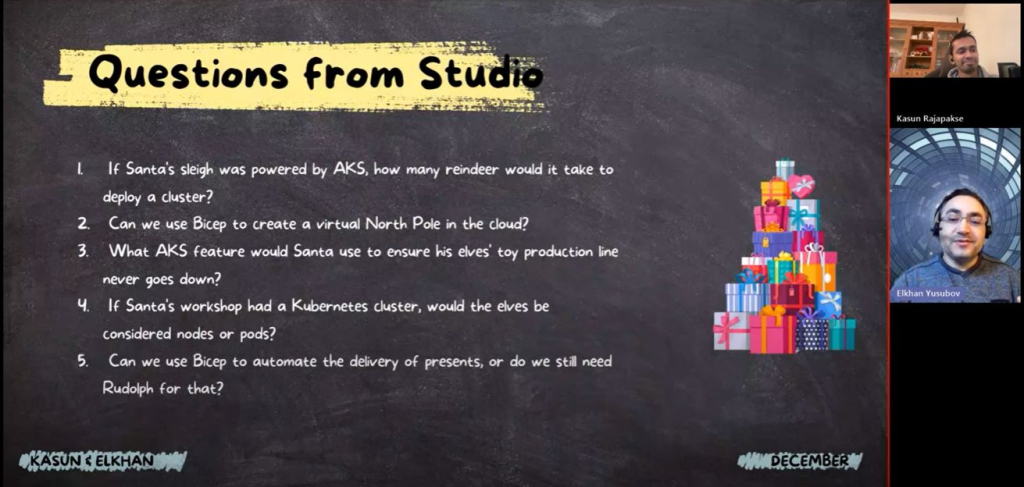
Please come prepared to our session with your great questions on gears and skills that elves need to learn about. Your help to get them prepared will be appreciated very deeply.

Join elves for a holly jolly tech adventure session with the details below:

๐Ÿ“† Event Date: Dec 21, 10 am EST
๐Ÿ“Œ YT Channel ๐Ÿ‘‰ https://lnkd.in/ehkCwVep
๐Ÿˆโ€โฌ› GitHub repo ๐Ÿ‘‰ https://lnkd.in/eUUTxBhE